Front-loader Vs Top-loader: Common Faults & Repair Explained
Table of Contents
- How Front-Loaders & Top-Loaders Differ in Design
- Common Faults in Front-Loading Washing Machines
- Common Faults in Top-Loading Washing Machines
- How Front-Loader Repairs Are Typically Handled
- How Top-Loader Repairs Are Typically Carried Out
- When DIY Fixes Are Suitable & When to Seek Help
- Preventative Maintenance for Longer Machine Life
- Why Accurate Diagnosis Matters for Reliable Repairs
- Get in Touch
A washing machine is one of those household essentials that rarely gets much thought, until something goes wrong mid-cycle. Whether it’s a front-loader that refuses to spin or a top-loader that suddenly starts knocking, faults can quickly disrupt day-to-day routines. Understanding how these machines differ, and the types of issues they commonly develop, can make a noticeable difference when it comes to maintenance, repairs and long-term reliability.
Both front-loading and top-loading washing machines have their own design features, performance traits and repair considerations. Knowing what to expect from each type can help you spot early warning signs, take simple preventative steps and decide when it’s time to call in support for
washing machine repairs on the Central Coast.
How Front-Loaders & Top-Loaders Differ in Design
The main distinction between these machines lies in how they’re built and how they move water and clothing during a wash cycle. Front-loaders use a horizontal drum that tumbles clothes, while top-loaders rely on either an agitator or impeller to shift items through water.
This difference affects not only washing performance, but also the types of wear and tear each machine experiences over time.
- Front-loaders typically use less water & rely on gravity & rotation
- Top-loaders tend to have shorter cycles & a simpler loading process
- Internal components such as bearings, seals & suspension systems vary between models
- Access points for repairs differ, influencing how faults are diagnosed & fixed
Because of these variations, repair approaches are rarely the same between the two types.
Common Faults in Front-Loading Washing Machines
Front-loading machines are known for their efficiency and gentle handling of fabrics, but they can develop specific issues linked to their sealed design and moisture retention.
Some of the most frequently reported faults include:
- Door seal mould & odours caused by trapped moisture and detergent residue
- Drainage problems due to blocked filters, hoses or pump issues
- Spin cycle errors often linked to imbalance, motor strain or sensor faults
- Water leaks from worn door seals or internal hoses
- Electronic control faults affecting cycle selection or completion
These issues can build gradually, especially if regular cleaning and airing of the machine are overlooked.
Common Faults in Top-Loading Washing Machines
Top-loaders are often seen as straightforward and durable, but they are not immune to faults. Their mechanical components can wear out over time, particularly with frequent or heavy use.
Typical issues include:
- Unbalanced loads leading to loud banging or interrupted cycles
- Agitator or impeller faults affecting washing performance
- Lid switch failures preventing the machine from starting or spinning
- Water level problems caused by sensor or valve issues
- Drive belt wear resulting in reduced drum movement
These faults are often noticeable early, as they tend to affect the machine’s movement and sound during operation.
How Front-Loader Repairs Are Typically Handled
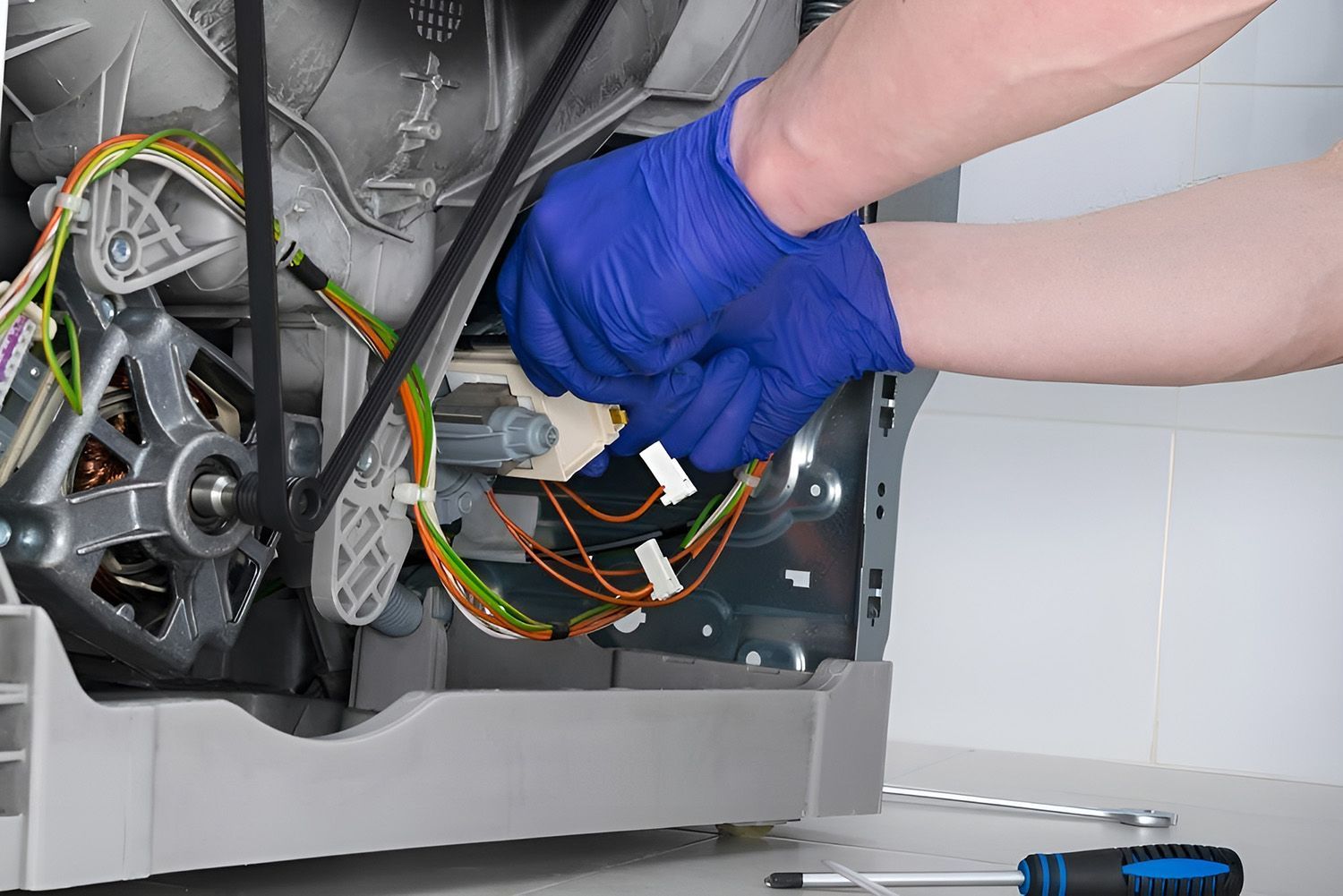
Repairing a front-loader often involves working with tightly sealed components and electronic systems. Accessing internal parts can require partial disassembly of the unit, depending on the fault.
Common repair processes may include:
- Replacing or cleaning door seals to address mould or leaks
- Clearing drainage systems & inspecting pumps for blockages
- Checking motor performance & correcting spin-related faults
- Diagnosing electronic control boards or sensors
- Inspecting internal hoses & connections for signs of wear
Because many components are interconnected, identifying the root cause of a problem is an important step before any repair work begins.
How Top-Loader Repairs Are Typically Carried Out
Top-loaders generally allow easier access to internal components, which can make certain repairs more straightforward. However, mechanical faults can still require careful handling.
Typical repair work may involve:
- Adjusting or replacing suspension rods to correct imbalance issues
- Repairing or replacing agitators or impellers
- Testing & replacing faulty lid switches
- Inspecting belts, pulleys & drive systems
- Addressing water inlet & drainage concerns
While some issues are simple to identify, others may require a closer inspection of internal mechanisms.
When DIY Fixes Are Suitable & When to Seek Help
Not every washing machine issue requires immediate outside assistance. Some minor problems can be addressed safely with basic maintenance and checks.
DIY actions that may be suitable include:
- Cleaning lint filters & drainage filters
- Wiping down door seals & leaving the door open after use
- Checking for visible blockages in hoses
- Redistributing clothing to correct unbalanced loads
However, more complex faults should be handled with caution.
Situations where outside support is recommended:
- Persistent error codes or electrical issues
- Water leaks that cannot be traced easily
- Unusual noises from internal components
- Repeated cycle failures despite basic troubleshooting
Attempting repairs without the right tools or knowledge can lead to further damage or safety concerns.
Preventative Maintenance for Longer Machine Life
Regular care can reduce the likelihood of faults and help your washing machine operate smoothly over time. Simple habits can make a noticeable difference.
For front-loaders:
- Leave the door slightly open after use to allow airflow
- Clean the door seal regularly to prevent build-up
- Run occasional maintenance cycles to clear residue
For top-loaders:
- Avoid overloading the drum
- Check pockets for objects that could damage internal parts
- Monitor for early signs of imbalance or unusual noise
For both types:
- Use the correct amount of detergent
- Inspect hoses periodically for wear
- Keep the surrounding area clean and dry
These steps can help reduce strain on components and delay the need for repairs.
Why Accurate Diagnosis Matters for Reliable Repairs
Washing machine faults are not always as simple as they appear. A drainage issue, for example, could stem from a blocked hose, a faulty pump or an electrical signal problem. Without proper diagnosis, replacing the wrong component can lead to repeated breakdowns.
Key considerations in repair work include:
- Identifying the exact source of the fault rather than treating symptoms
- Using compatible replacement parts suited to the specific model
- Checking related components that may also be affected
- Testing the machine thoroughly after repairs are completed
Taking a considered approach can help reduce the likelihood of recurring issues and unnecessary costs.
Get in Touch
When your washing machine starts showing signs of trouble, getting the right support early can help prevent further disruption. At Eurocoast Appliance Service, we assist with washing machine repairs on the Central Coast, working with both front-loading and top-loading machines across a range of common faults.
From coastal humidity affecting seals to the wear that comes with daily household use, local conditions can play a role in how appliances perform. If your machine isn’t running as expected, reach out to
arrange a booking and have the issue looked at before it develops into a larger problem.